
Created 1979 | ~590,000 hectares | Sucumbíos & Orellana, Ecuador | The largest wetland in the Ecuadorian Amazon
A Corner of the Ecuadorian Amazon
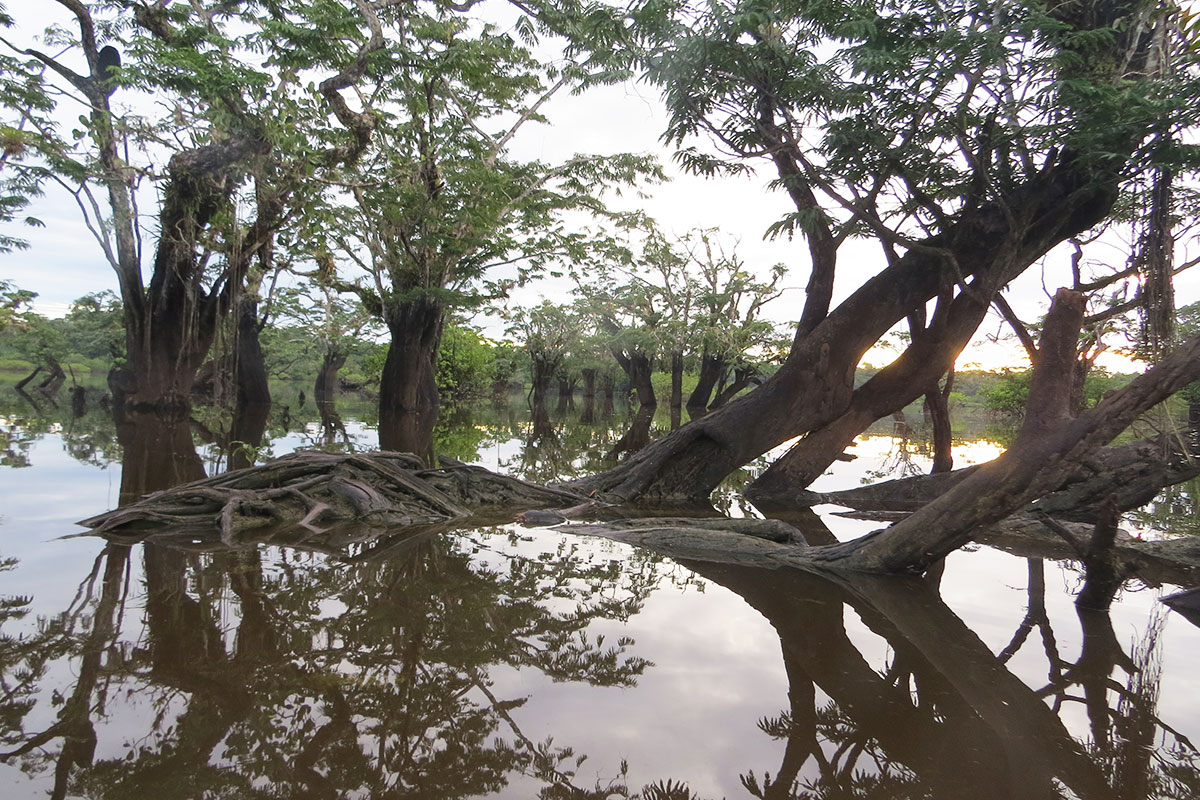
The Cuyabeno Wildlife Reserve sits in the northeast of Ecuador, across the provinces of Sucumbíos and Orellana, and it covers around 590,000 hectares of rainforest, rivers, and flooded forest. It was created in 1979 to protect the wildlife and the wetlands here, and it takes its name from the Cuyabeno River, which overflows along its course to form a network of fourteen lagoons, the largest wetland in the Ecuadorian Amazon, where the forest grows straight up out of the water and the lagoons sit flat and still.
The Water Sets the Pace
More than anything else, it is the water that shapes a visit to Cuyabeno. The rivers rise and fall through the year, and the forest changes with them, so the reserve you see in March is not quite the reserve you see in August. There is no single best time to come. It depends on whether you want to walk more and watch the banks, or drift through the flooded forest at its fullest.
December – March
Lower water
Lower rivers mean more exposed banks, easier walking through the forest, and wildlife gathering along the shrinking shoreline. The better stretch for hiking and watching the riverbanks.
April – November
Higher water
Higher rivers open up the flooded forest, so you can paddle a canoe deep among the trees, into places you cannot reach once the water drops. The reserve at its fullest.
What Lives Here
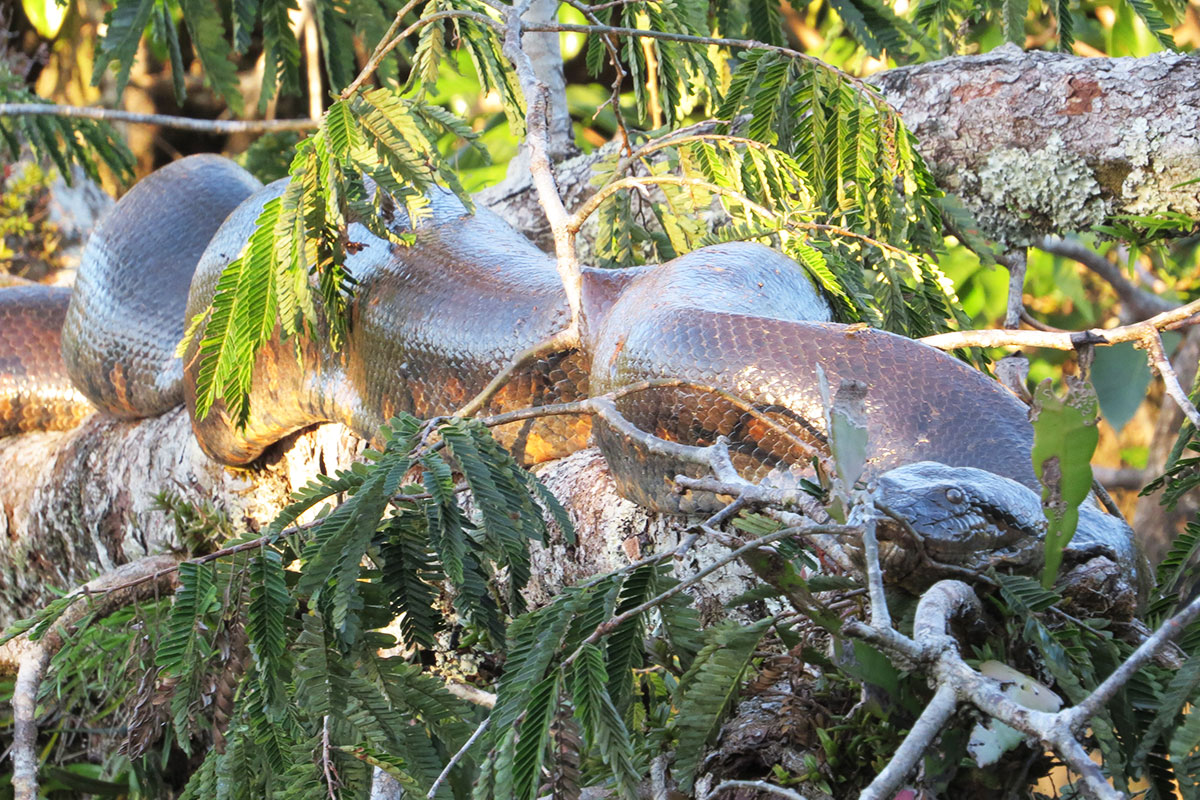
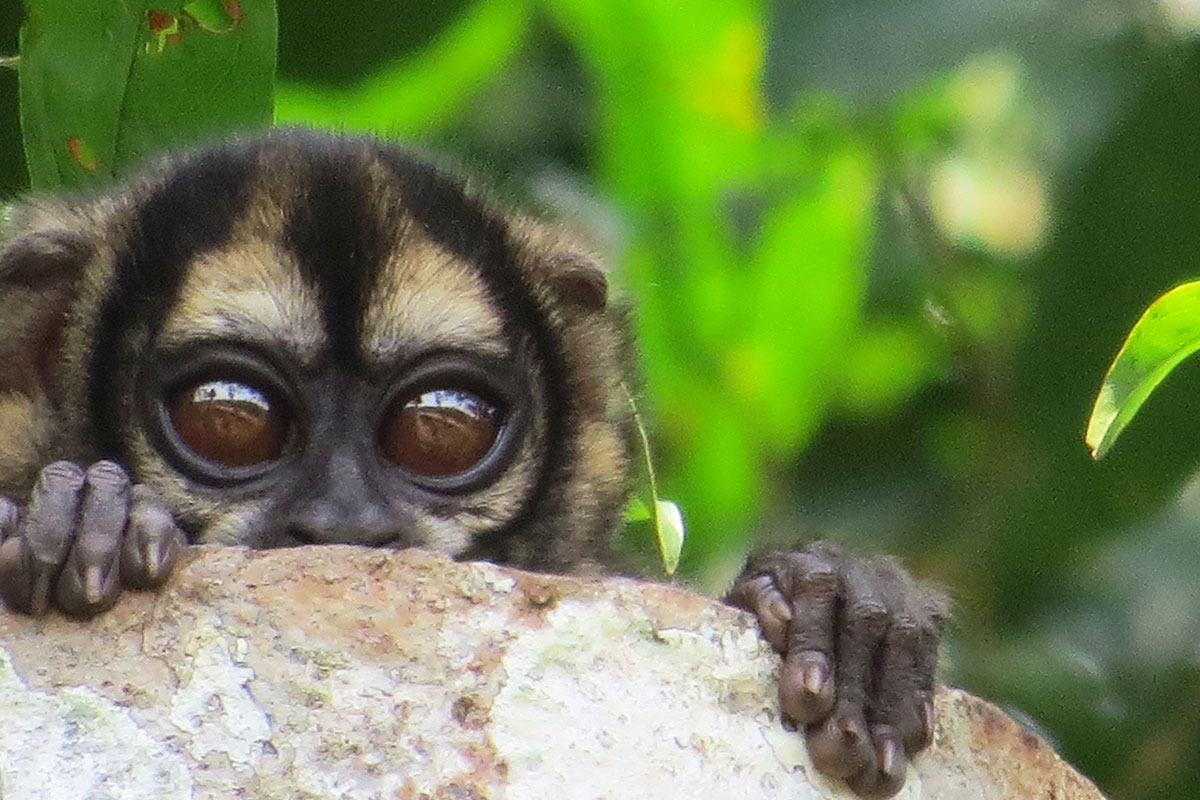
Cuyabeno is one of the most biodiverse places on the planet, with somewhere around 1,100 species of animals sharing the reserve, and a good number of them are the kind you came hoping to see. There are pink river dolphins in the lagoons, the largest river dolphins there are, grey most of the time and turning pink when they get active. There are three kinds of caiman in these waters, from the little dwarf caiman at about a meter long to the black caiman that can reach six. And there are monkeys in the canopy, giant otters, anacondas, sloths, peccaries, and the cats that keep their distance, the jaguar, the ocelot, and the puma, along with parrots, macaws, and more birds than most people can count in a week.
None of it is guaranteed, and that is the honest part. The animals are wild and the forest is big, so what you see depends on the season, the water, the time of day, and a fair bit of luck. A good guide who grew up here changes your odds more than anything else, and ours read the forest for a living.
The Most Diverse Hectare on Earth
The plant life here is almost hard to believe. The reserve holds around 1,400 known species of plants, and some studies think the real number could be closer to 4,000. One often-cited count found 473 species of trees with trunks wider than five centimeters in a single hectare of Cuyabeno forest, which made it, at the time, the most diverse hectare of trees ever recorded anywhere on Earth (Valencia et al., 1994).
Trees like the ceibo and the mahogany rise more than fifty meters overhead, there are dozens of kinds of orchids and palms, and out on Laguna Grande you will find the water guarangos, the trees that stand right in the lagoon with their roots in the black water. It is the kind of forest where your guide can stop at what looks like an ordinary plant and tell you what it cures.
The People of Cuyabeno
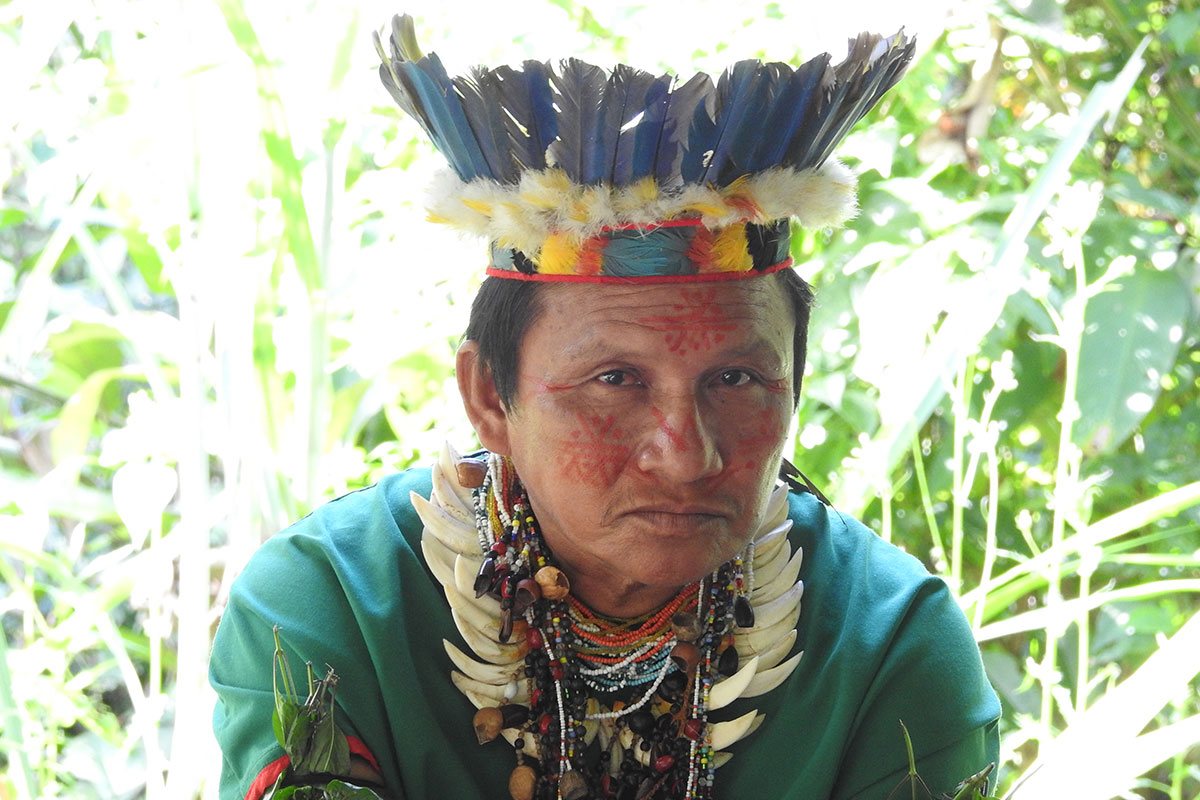
People have lived in this part of the Amazon for far longer than it has been a reserve. Several Indigenous communities make their home along the Cuyabeno and Aguarico rivers, from five nationalities, the Siona, the Secoya, the Cofán, the Kichwa, and the Shuar, each with their own language, their own knowledge of the forest, and their own way of reading it.
Much of what makes a visit here worth it comes from them. The guiding, the river knowledge, the names for plants and animals that no book carries, all of it is carried by the people who grew up inside the forest. At Tucán that is not a side note, because the lodge is locally owned, our guides are from here, and one of our founders, Carlos, is Siona. When you visit a community on a longer tour, you are meeting the people whose home this has always been.
Keeping It Wild
A place like this does not stay wild on its own. Cuyabeno faces real pressure, from oil activity at its edges to illegal hunting, logging, and farmland creeping in along the boundaries, and the health of the rivers matters to everyone who lives downstream. Ecuador protects the reserve, and the communities inside it take part in looking after it, and that work is part of why the forest is still standing the way it is.
We try to do our small part too. The lodge is built to tread lightly, our water is filtered and returned clean to the forest, and we would rather grow slowly and keep this place worth visiting than wear it out. You can read more about how we do that on our Why Tucán page.
Cuyabeno Questions, Answered
The things people most want to know before visiting the Cuyabeno Wildlife Reserve
The Cuyabeno Wildlife Reserve is in the northeast of Ecuador, across the provinces of Sucumbíos and Orellana, in the Amazon basin. Most visitors reach it overland from Quito and then continue by canoe along the Cuyabeno River. You can see the route on our Getting Here page.
The reserve covers around 590,000 hectares of rainforest, rivers, and flooded forest. It was created in 1979 and protects the largest wetland in the Ecuadorian Amazon, named after the Cuyabeno River that overflows along its course into a network of lagoons.
There is no single best time. From December to March the water tends to be lower, with easier walking and wildlife gathering along the banks. From April to November the water is higher and you can paddle deep into the flooded forest. It comes down to what you want from the trip, and the forest is worth seeing either way.
Pink river dolphins, three kinds of caiman, monkeys, giant otters, sloths, anacondas, and hundreds of birds, among a great deal more. Nothing is guaranteed, because the animals are wild, but a local guide makes a real difference to what you see. You can see what a few days in the reserve looks like on our tours.
Most people travel overland from Quito the night before the tour, then continue by motorized canoe into the reserve in the late morning. We can help you arrange the transport, and the full details are on our Getting Here page.
Tourism in the reserve runs through licensed lodges and local guides, so visits are guided rather than independent. That is part of how the reserve stays protected, and it is also how you see anything, because the forest takes a trained eye to read. Have a look at our Plan Your Trip page to start.
Come see it for yourself
The best way to understand Cuyabeno is to spend a few days in it. Take a look at our tours, and we will help you plan the rest.
→ See Our Tours